
Insights from the ELT Seminar Series in Cyprus
 Insights from the ELT Seminar Series in Cyprus
by İdil Ertugan, Seda Ertüm Emirler, Esra Gün Alayafi
As part of a recent professional development seminar held in Cyprus, a series of workshops explored current trends and priorities in English Language Teaching (ELT). The sessions focused on how teaching practices can respond more effectively to the demands of a digital, globalized, and rapidly changing world. This report summarizes key ideas from three workshops led by John Hughes and Alex Warren.
Visual Literacy in ELT by John Hughes
John Hughes’ session focused on the growing importance of visual literacy in language education. In today’s image-rich environment, learners need to go beyond reading and listening skills and develop the ability to interpret and use visual information.
Visual literacy was described as involving two main skills: understanding images (decoding) and using images to communicate meaning (encoding). Hughes emphasized that images should not be treated simply as classroom warmers, but as meaningful texts that can be analyzed and discussed.
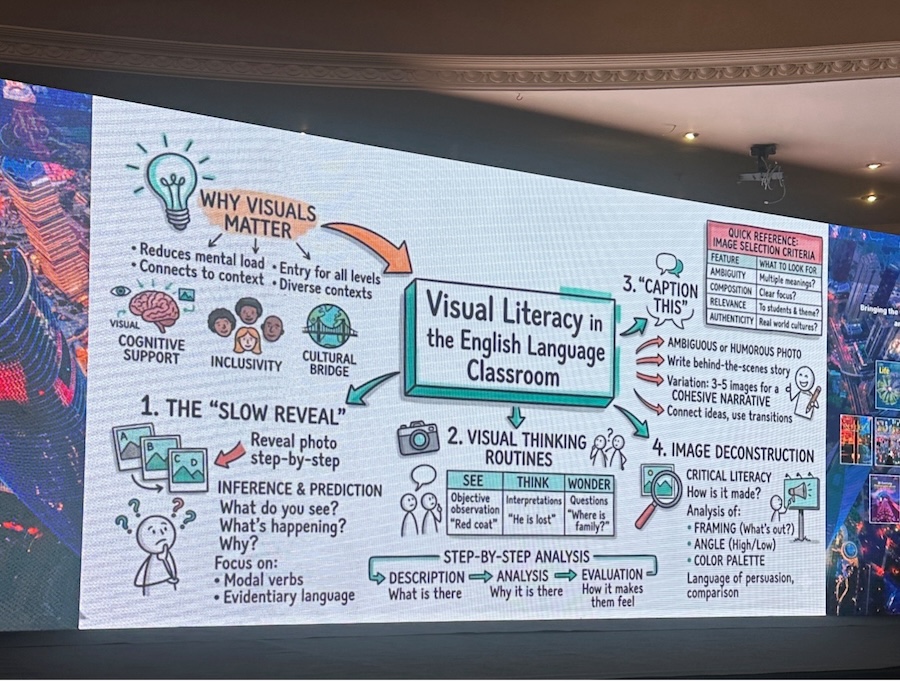
He shared several practical classroom ideas, such as encouraging students to interpret images more deeply, working with partial visuals to promote inference, and using images as a basis for writing tasks. For example, teachers can ask guiding questions like “What might have happened just before this moment?” or “What is likely to happen next?” to develop prediction and discussion skills. Another activity involves showing only part of an image and asking students to guess what it represents, encouraging the use of modal verbs such as might, could, and must. Images can also be used as prompts for writing tasks, including descriptions, short narratives, or explanations of the message behind a visual. He also highlighted the teacher’s role in helping students move beyond simple observation towards more critical and reflective analysis.
Future-Ready Skills in the English Classroom by Alex Warren
Alex Warren’s workshop addressed the need to integrate future-ready skills into English teaching. He argued that language learning should include not only linguistic competence but also a broader set of skills such as critical thinking, creativity, collaboration, digital literacy, and adaptability. These competencies are increasingly essential for students to function effectively in academic, professional, and social contexts.
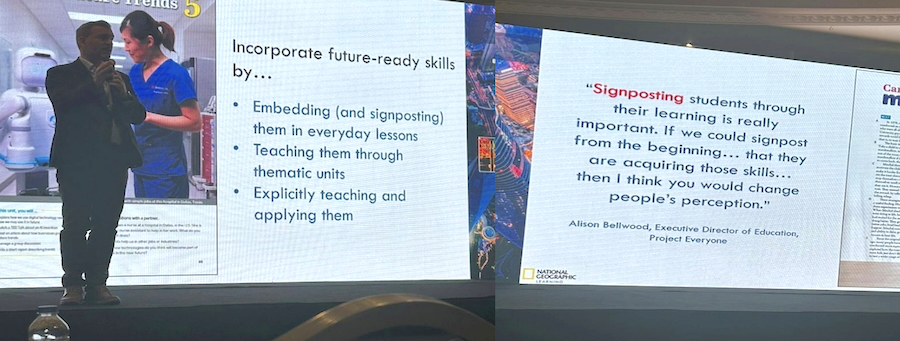
While the English classroom already lends itself to communication and interaction, Warren emphasized the importance of moving beyond textbook-based instruction towards more meaningful, real-life tasks. Task-based and project-based learning were presented as effective approaches, as they require students to use language to solve problems, share ideas, and work collaboratively. For example, students might work in groups to design a solution to a real-world issue, prepare a presentation, or carry out a small-scale research task.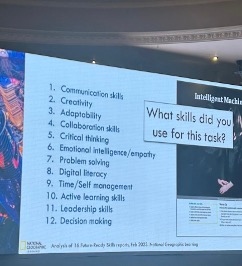 The integration of digital tools was also highlighted as a key component. Warren suggested using online platforms for collaboration, encouraging students to create multimedia content such as videos or presentations, and guiding them in conducting research using digital sources. In this way, learners develop not only their language skills but also their ability to navigate and evaluate information in a digital environment.
Another important aspect discussed was the development of global competence. By engaging with topics that reflect real-world issues and diverse perspectives, students are encouraged to think beyond their immediate context and use English as a means of participating in wider discussions.
Overall, the session reinforced the idea that teachers play a central role in facilitating learning rather than simply delivering content. This involves designing purposeful tasks, supporting interaction, and encouraging student autonomy, while also helping learners reflect on both their language use and their learning processes.
Incorporating Sustainability in the ELT Classroom by Alex Warren
In a related session, Alex Warren focused on how sustainability can be integrated into English language teaching. He presented sustainability as a broad concept, including environmental, social, and economic aspects.
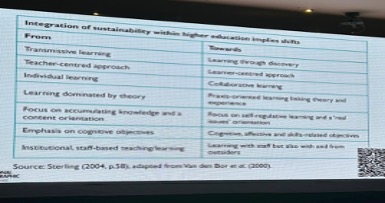 Bringing sustainability into the classroom was shown to increase student engagement and promote meaningful communication. Topics such as climate change, responsible consumption, and social issues provide a strong basis for discussion and critical thinking.
Warren suggested practical ways to introduce these themes, including the use of relevant texts and media, classroom discussions, and project-based activities such as surveys or awareness campaigns. He also emphasized the importance of connecting global issues to students’ local contexts.
In addition, teachers can model sustainable behavior through simple classroom practices, such as reducing paper use or encouraging responsible habits.
The seminar series offered useful insights into how English language teaching can be adapted to better reflect the realities of today’s world. A common message across all three workshops was the importance of making lessons more meaningful, engaging, and connected to real-life issues.
By incorporating visual literacy, future-ready skills, and sustainability into their teaching, educators can support not only language development but also help students become more aware, critical, and active participants in a global context. In this context, the School of Languages has been successful in addressing these areas through a wide variety of practices integrated into its curriculum and teaching approaches. However, it is good to keep in mind that such efforts require ongoing reflection and adaptation to remain responsive to the evolving needs of students and the wider world.