
From Awareness to Engagement: Building Skills and Resilience to Engage with Sustainability Challenges & Framework-Based AI Literacy Training for Future-Ready Pre-Service ELT Teachers
From Awareness to Engagement: Building Skills and Resilience to Engage with Sustainability Challenges - Rachel Jeffries
A Review by Büşra N. Özer Musaoğlu & Gökçe Dülgerci
On 10 October 2025, we attended an online professional development session titled “From Awareness to Engagement – Building Skills and Resilience to Engage with Sustainability Challenges,” delivered by Rachel Jeffries as part of Equals Online Conference. The session explored how teachers can move beyond simply raising awareness of environmental issues and instead empower learners to engage actively with sustainability through skills-based and reflective classroom practices.
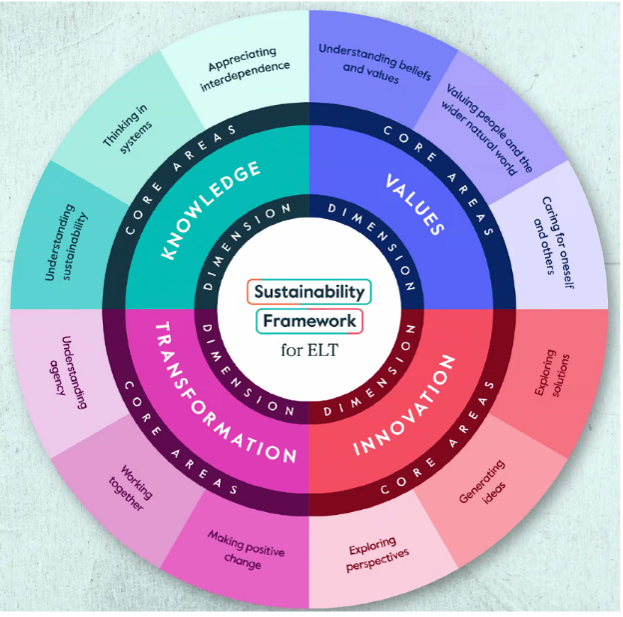
Jeffries introduced the Cambridge Sustainability Framework for ELT. She emphasized that sustainability can be embedded into communicative lessons rather than treated as an additional topic. Her examples—such as project-based tasks where students investigate local environmental issues and present solutions in English—demonstrated how language teaching and global awareness can complement each other. We found these ideas particularly valuable as they encourage students to think critically, collaborate, and feel responsible for real-world issues while improving their language skills.
The session also encouraged us to reflect on our own teaching contexts. We realized that integrating sustainability does not necessarily require major curricular changes but rather small, meaningful adaptations. For example, while teaching conditionals or persuasive language, teachers can design speaking tasks around sustainability challenges, making grammar practice more purposeful and engaging.
Another important takeaway was the emphasis on teacher resilience. Jeffries reminded participants that educators need to manage their own emotional responses when discussing global challenges and to create supportive classroom environments where students feel safe to express opinions and emotions. We found this perspective especially relevant, as it highlights the emotional side of teaching sustainability and the importance of fostering empathy alongside knowledge.
Overall, the session was insightful and inspiring. It provided practical strategies for integrating sustainability into language teaching and reinforced our belief that English teachers play a vital role in helping learners become informed, responsible, and compassionate global citizens.
Framework-Based AI Literacy Training for Future-Ready Pre-Service ELT Teachers - Özlem Zengin & Züleyha Tülay
A Review by Büşra N. Özer Musaoğlu & Gökçe Dülgerci
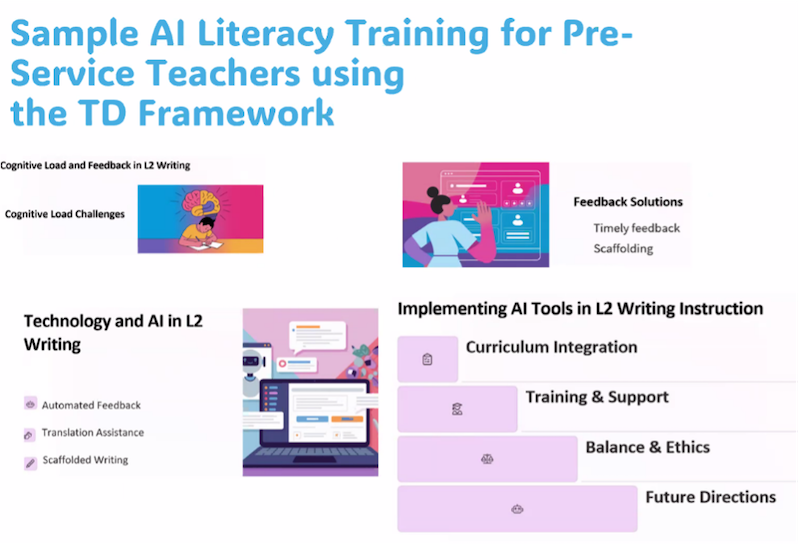
The second concurrent session we attended was delivered by our colleagues Özlem Zengin and Züleyha Tülay. It was a professional development session titled “Framework-Based AI Literacy Training for Future-Ready Pre-Service ELT Teachers,”. The session provided valuable insights into how artificial intelligence tools can be meaningfully and ethically integrated into English language teaching, preparing pre-service teachers for the evolving demands of the digital age.
Züleyha and Özlem began by outlining the importance of AI literacy in education, drawing on current frameworks that emphasize critical awareness, digital competence, and pedagogical adaptation. They demonstrated how generative AI tools can support lesson planning, material development, and formative assessment while maintaining academic integrity and learner agency. Their examples showed that when used thoughtfully, AI can enhance creativity, efficiency, and personalization in language learning rather than replace human judgment.
We found the discussion of ethical considerations particularly thought-provoking. The presenters encouraged teachers to model responsible use of AI by discussing data privacy, bias, and transparency with students. This approach reflects a forward-looking perspective on teacher education—one that prepares future educators not only to use technology effectively but also to guide learners in navigating digital challenges critically and responsibly.
As colleagues, we were especially proud of the professionalism and clarity with which Özlem and Züleyha delivered the session. It was inspiring to see how their expertise and enthusiasm motivated attendees (pre-service teachers) to reflect on their own teaching practices and explore new possibilities for technology integration.
Overall, the session was highly enriching. It deepened our understanding of AI literacy within the ELT context and reaffirmed the importance of balancing innovation with ethical awareness. We left the session feeling inspired to continue developing our own digital competencies and to help our students become adaptable, critical, and responsible users of emerging technologies.