
The IATEFL Brighton 2026 Conference

The IATEFL Brighton 2026 Conference
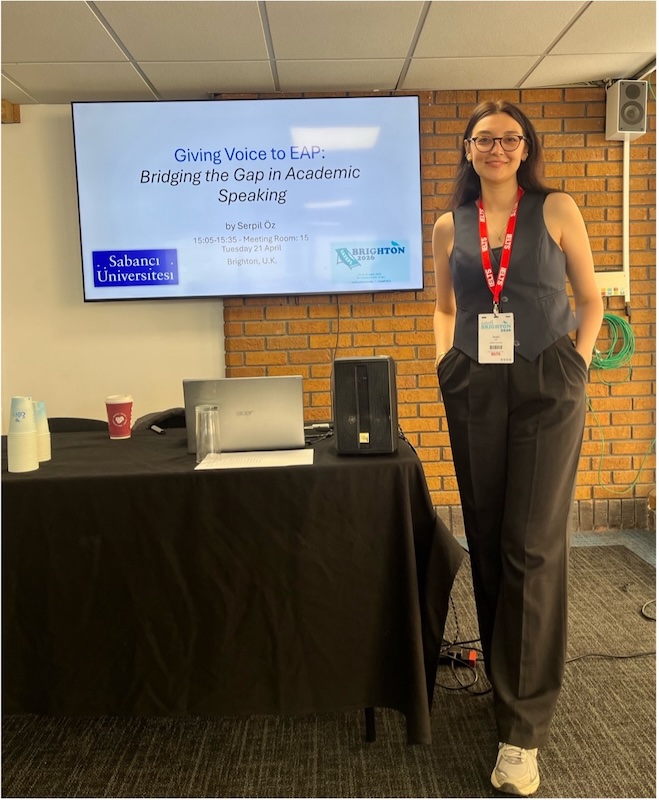
by Serpil Öz
In mid-April, I attended the IATEFL Brighton 2026 Conference, one of the leading global events in English language teaching, where I also experienced the incredible milestone of presenting my own work there for the very first time. This conference brought together researchers, practitioners, experts, and trainers from an international community of educators, featuring over 600 academic sessions.
The conference explored key themes such as the evolving role of English in a global context, human-centred and ethical pedagogy, and classroom-informed teaching practices. A strong emphasis was placed on the global, social, and ethical dimensions of language teaching, highlighting issues such as identity, inclusion, and the role of English in diverse contexts. At the same time, the growing impact of technology—particularly AI—was explored critically, alongside questions of pedagogy, authenticity, and sustainability. The program also underscored the importance of learner agency and evolving approaches to assessment, while remaining firmly grounded in classroom-informed practices and practical application. Sessions ranged from plenaries and workshops to panel discussions and presentations, offering both practical strategies and critical perspectives on the future of ELT.
In this blog post, I have shared some personal notes from the sessions I attended to share these valuable insights. IATEFL has also released the recordings of the plenary sessions; if any SU colleagues would like to access them, they can access the recordings via the provided link.
On the first day of the conference, the plenary session titled “English language - the coloniser. A black female leader's response” was delivered by Patricia Angoy, which was a very eye-opening session on the role of English carrying the legacy of colonialism, power, and inequality. The plenary highlighted that English language teaching is deeply intertwined with historical, political, and social forces, rather than being a neutral or purely technical practice. It frames English as a global language shaped by colonial histories and power structures, which continue to influence whose voices are prioritized and how language norms are defined. From this perspective, ELT requires a critical and reflective approach—one that acknowledges these legacies and moves beyond simply teaching standardized forms of English toward a more conscious and ethically informed practice.
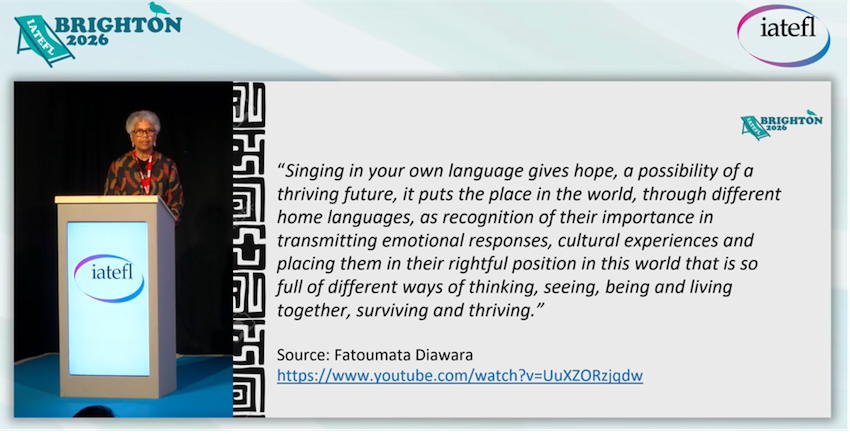
Building on this, Angoy emphasized the responsibility of educators and leaders to create more inclusive and equitable learning environments. This involves amplifying diverse voices, valuing learners’ linguistic and cultural backgrounds, and rethinking classroom practices, materials, and expectations. Ultimately, the plenary calls for a shift toward a more human-centered and socially responsible vision of ELT—one that fosters dialogue, challenges inequalities, and supports learners in developing not only language skills but also voice, agency, and participation in a global context.
Another session titled “From Fluency to Agency: Empowering Learners through Values-Based Tasks” I attended was delivered by Fannie Daou. She mentioned the interconnected relationship between fluency and agency by arguing that the more values there are in EFL/ESL classes, the greater the ownership of the language learning process and the more purposeful the communication will be. She mentioned the purpose of value-based tasks in language classrooms because those tasks motivate, give purpose, foster ethical citizenship, shape worldview, and give a chance to socially practice language. In curriculum, she claimed that curriculum designers started to forget the fact that humans are being educated and therefore, there are not many value-focused tasks in the curricula. The task cycle is structured as follows:
1- pre-task: introduction and brainstorming language
2- core task
3- language focus: input + feedback
4- reflection: connect language to values & agency
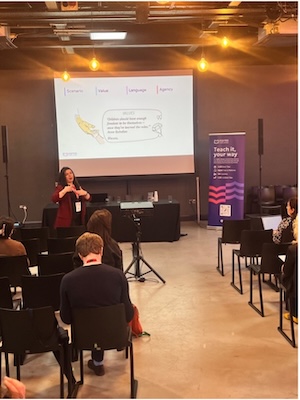 By values, she meant giving scenarios or quotes in the related unit – whatever the unit is about. She gave the example of “your teacher has suggested you be class spokesperson on the college council. She wants to reward you for all the volunteering work you have done for environmental organizations. You are pleased that she has shown confidence in you, but are aware that there are several other classmates who are equally deserving and would like the chance to put themselves forward for the position. The teacher has not yet announced her decision to the class. What do you do?”.
She believes that the benefits of these kinds of value-based tasks are that they boost motivation, build critical thinking and empathy, strengthen fluency in context, and encourage action beyond words. One challenge of this design is that there could be some sensitive topics. At that stage, she suggests giving students a safe space so that they are not threatened or triggered. She also mentions that there could be curriculum constraints and she suggests that teachers could embed values subtly into their lessons.
As for the key takeaways, she suggests that teachers should start small, encourage learner choice, balancing language goals and, therefore, a balanced focus on values, and finally teachers should always ask this question “How can this inspire action?”
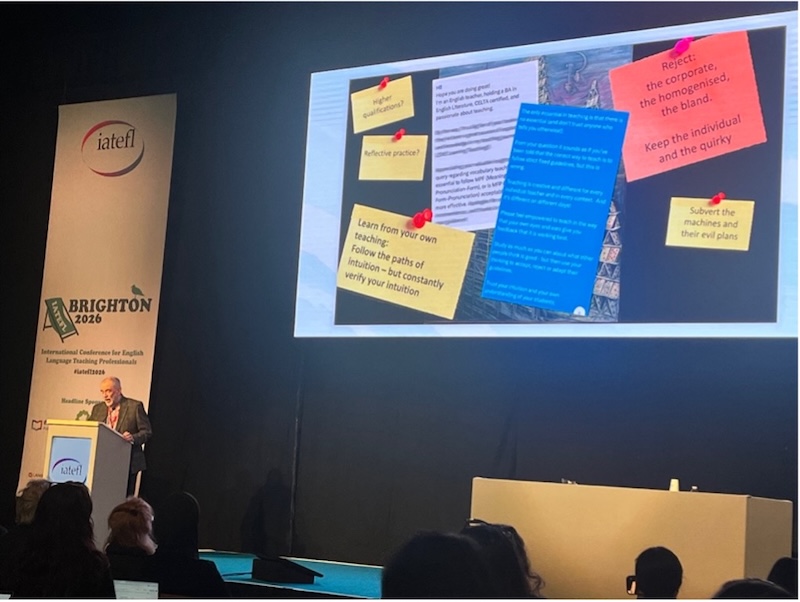
The session titled “30 practical tips, suggestions, flashes of wizardry and dead ends in 30 minutes” from Jim Scrivener was one of the game changer sessions I attended. He challenges the traditional obsession with methodology, suggesting that the specific "system" used in class matters less than the teacher's ability to foster a genuine relationship with the classroom. The notes emphasize that as long as classroom management—driven by humor, excitement, and engagement—is effective, various teaching methods can succeed. Scrivener argues that the core of language acquisition isn't found in the "what" of input, but in consistent exposure to the language through a high volume of examples. He suggests that coursebooks often fail to provide enough of this exposure and encourages teachers to refine AI prompts to generate better, more context-rich examples for students.
A significant takeaway from the session is the idea that "learning is doing it to yourself," positioning practice as the engine of the educational experience. He encourages teachers not to abandon "unfashionable" techniques, such as simple repetition or oral drills, as these provide the necessary play with language examples. Additionally, Scrivener mentions that teachers do not need "spurious games." Instead of adding external layers of gamification, he recommends "gamifying the language" itself—for example, by having students test the "feeling" or intonation of a simple present continuous tense sentence like "She is going to the party with Richard" to make the linguistic structure the focus of the fun, such as “say it in a way that you do not believe it” or “A says this to B with anger” etc.
He also addresses the common misconception of "student-centered" learning, noting that "learning-centered" is often dangerously misunderstood by teachers. Instead, he suggests placing learnING in the center and therefore making lessons learnING-centered but not necessarily human-centered. He additionally encourages teachers to get better at classroom management. Practical classroom management tips include using "traffic lights" for intentionally not hearing, pausing longer before answering as a teacher, and avoiding the "tail" (repeating what a student just said) trap. Scrivener also highlights the importance of watching out for "helpful" sentence completion by the teacher, suggesting techniques like "finger lock" to ensure students are the ones doing the cognitive work to finish their thoughts.
The concluding remarks from Scrivener’s session shift toward the psychological and philosophical mindset of an educator, highlighting the "one technique that changes everything": holding back on the pursuit of "good" or "perfect" words as teachers every time students say something. He suggests that constantly striving for such words can actually shut down a conversation. Instead of providing the answers or quick feedback, he encourages teachers to step back and ask students, "What do you think?" or "Ask your neighbor: is what your classmate has just said true?", moving the focus of learning to where it can reach even the quietest students. This approach embraces the next tip that he states that "supposition is more exciting than proof"—the act of hearing something and trying it out on our own as teachers is what truly transforms teaching.
A major theme in his session is the rejection of rigid, over-planned lessons in favor of "unfolding." He mentions that for inexperienced or trainee teachers, planning for details could be nice; however, for experienced teachers, Scrivener argues that detailed lesson plans can actually be limiting. While preparation is essential, over-planning every detail prevents a lesson from breathing. He advocates for "learning from your own teaching and also from others’" by following intuition and understanding as a lesson develops naturally. This requires a certain level of comfort with the unknown and a willingness to reject "corporate" or "homogenized" teaching styles in favor of keeping things individual and quirky.
Finally, he touches on the path to professional growth, suggesting that while higher qualifications have their place, true development often depends more on consistent reflective practice and developing one’s own ways. By finding ways to "live with the unfolding lesson" and learning from others’ teaching styles without losing one's own identity, a teacher can foster a more authentic and responsive classroom environment.
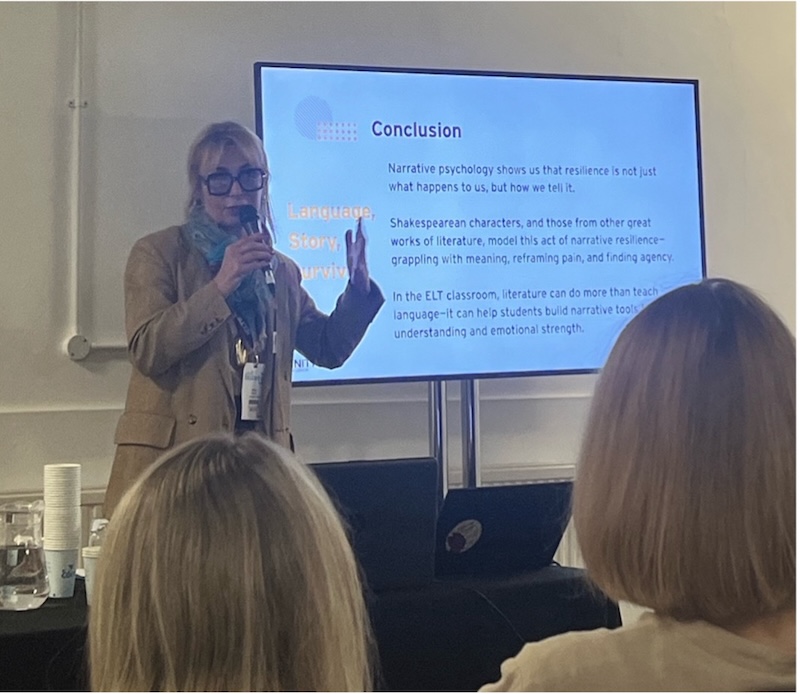
The teacher training session delivered by Alicja Galazka from Trinity College London, titled “Using narrative psychology and literature to build resilience in English language teaching", focused on the transformative power of "narrative competence" in the classroom. Drawing on the work of pioneers like Theodore R. Sarbin, Jerome Bruner, and Dan P. McAdams, the session posited that the self is an evolving story rather than a fixed discovery. This theoretical foundation suggests that because our personal narratives integrate the past, present, and future, they remain "editable". By understanding that life is a series of narrated events, students can learn to reshape their own stories, effectively addressing the psychological "stuckness" that Lori Gottlieb describes as a narrative problem.
In practice, the session presented literature as a "laboratory of resilience" where students can safely analyze character struggles to develop the skills needed to reshape their own experiences. This is achieved through specific practical applications such as narrative re-framing, which involves retelling a scene from a different perspective to build empathy, and reflective literary journals to process character journeys. Other methods include future narrative exercises, character therapy sessions, and discussions based on resilience themes in films and books. The session also explored drama and performative art as tools for narrative expression, while highlighting the importance of recognizing Gestalt language processing in neurodivergent learners, who may communicate and build their identity through language "chunks" rather than individual words. Ultimately, these methods aim to move beyond simple literacy, using literature to provide students with a sense of agency and hope.
Another interesting session titled “Beyond inclusivity: three neurodivergent communication features every ELT teacher should know” was delivered by Dr. Gemma Williams from the University of Sussex. Her talk emphasizes that neurodiversity—affecting roughly 15-20% of the population—should be viewed as a natural variation in how people process, experience, and communicate rather than a set of deficits. Central to this understanding is the concept of "languaging," the active process of shaping knowledge and meaning through language, which manifests differently across various neurotypes. A critical takeaway for ELT professionals is the Double Empathy Problem, which suggests that communication breakdowns between neurodivergent and neurotypical individuals are a mutual breakdown in understanding, rather than a failure on the part of the neurodivergent student alone. To address this challenge, she suggests asking our students to try to avoid making assumptions about behavior (based on neurotypical norms), allowing flexible language use, celebrating different strategies, and fostering pragmatic competence.
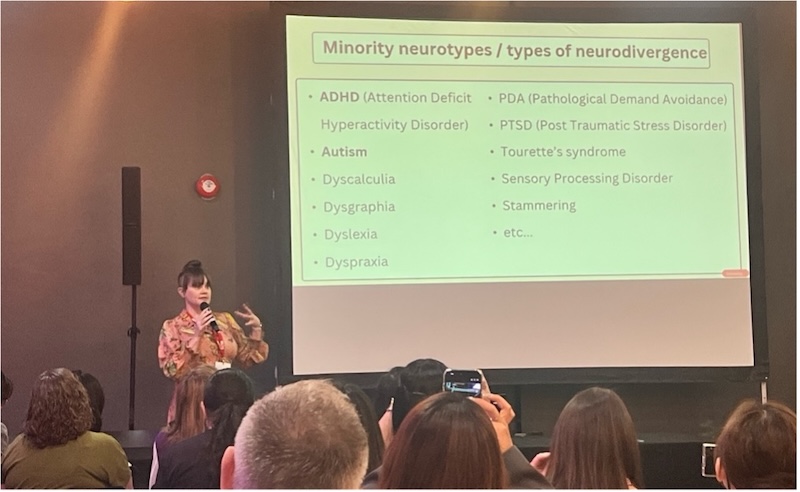
The session highlights two other vital features: monotropism and Gestalt language processing. Monotropism refers to a tendency to focus intensely on a single interest or task; for students in this "flow state," sudden teacher interruptions can be a physically and mentally painful process. To support these learners, the talk suggests a Gestalt Approach in ELT, which focuses on "chunking" rather than individual word analysis. By integrating a lexical approach—providing repeated exposure to multi-word phrases and exploring "chunk recycling"—teachers can better align their curriculum with how neurodivergent students naturally acquire and use language to make meaning.