Sabancı University & Duke University Collaboration: Intercultural Communication Project & Peer Learning Sessions
Sabancı University & Duke University Collaboration: Intercultural Communication Project & Peer Learning Sessions
by Tuğba Yıldırım Kumbasar
This semester, one of the most exciting experiences for us at Sabancı University School of Languages was collaborating with Duke University on two intercultural projects that brought students together beyond the limits of the classroom and created meaningful spaces for authentic communication, peer learning, and cultural exchange.
Our first collaboration, The Intercultural Communication Project, brought together Sabancı Route 3 students and Duke students learning Turkish in a shared online learning environment built around direct interaction and mutual learning. Over several weeks, students participated in communicative activities, written exchanges, virtual meetings, and reflective tasks focusing on topics such as intercultural communication and environmental issues. While these themes aligned naturally with the learning objectives of both programs, what made the experience especially valuable was the opportunity for students to connect with one another in a genuine and personal way while using their target languages.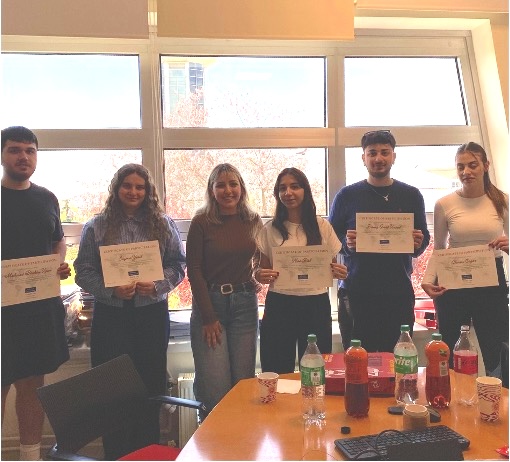 A total of nine Route 3 students from Sabancı University successfully completed the project, actively taking part in different stages of the exchange, including written discussions, online meetings, reflections, and collaborative activities. Their feedback showed that the experience had a strong positive impact on their language development, particularly in speaking skills. The interactive format helped students communicate more confidently and fluently by encouraging them to focus less on grammatical accuracy and more on meaningful communication. Many students also noted that this approach made language learning feel more natural and effective while contributing positively to both their speaking and writing abilities. At the same time, teacher support emerged as a key factor in the success of the project. Students emphasized that clear guidance was essential for understanding the structure and flow of the activities, while the teachers’ constant availability made it easier to ask questions and share feedback. According to the participants, this support made the process more manageable, motivating, and engaging throughout the experience.
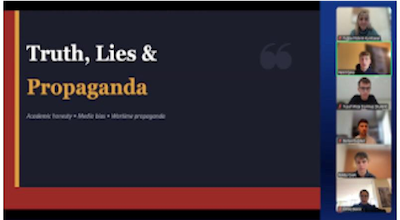
Our second collaboration was with the Duke University Middle East Studies Center (DUMESC), where we worked with DUMESC Fellows from diverse academic backgrounds to create Peer Learning Sessions for our R4INT students. Offered as a learning opportunity outside the classroom, these online sessions aimed to focus on vocabulary development, speaking practice, and guided discussions connected to themes from the R4 Intensive curriculum. More importantly, students could practice English in a supportive and collaborative setting while engaging with peers. The fellows’ academic interests and perspectives added another layer to the experience and helped foster discussions that felt authentic, engaging, and intellectually stimulating for the students involved.
 In both projects, seeing students interact so openly, support one another, and gradually become more confident communicators made the experience rewarding for everyone involved. We are grateful to all the students, instructors, and collaborators who contributed to these projects, and we hope to continue creating similar opportunities that bring language learning, intercultural communication, and global collaboration together in meaningful ways.