
Human-Centred, Ethical, and Context-Responsive AI Integration: Reflections from FOCI-XXIX
Human-Centred, Ethical, and Context-Responsive AI Integration: Reflections from FOCI-XXIX
Gamze Bozkurt & Esra Gün Alayafi
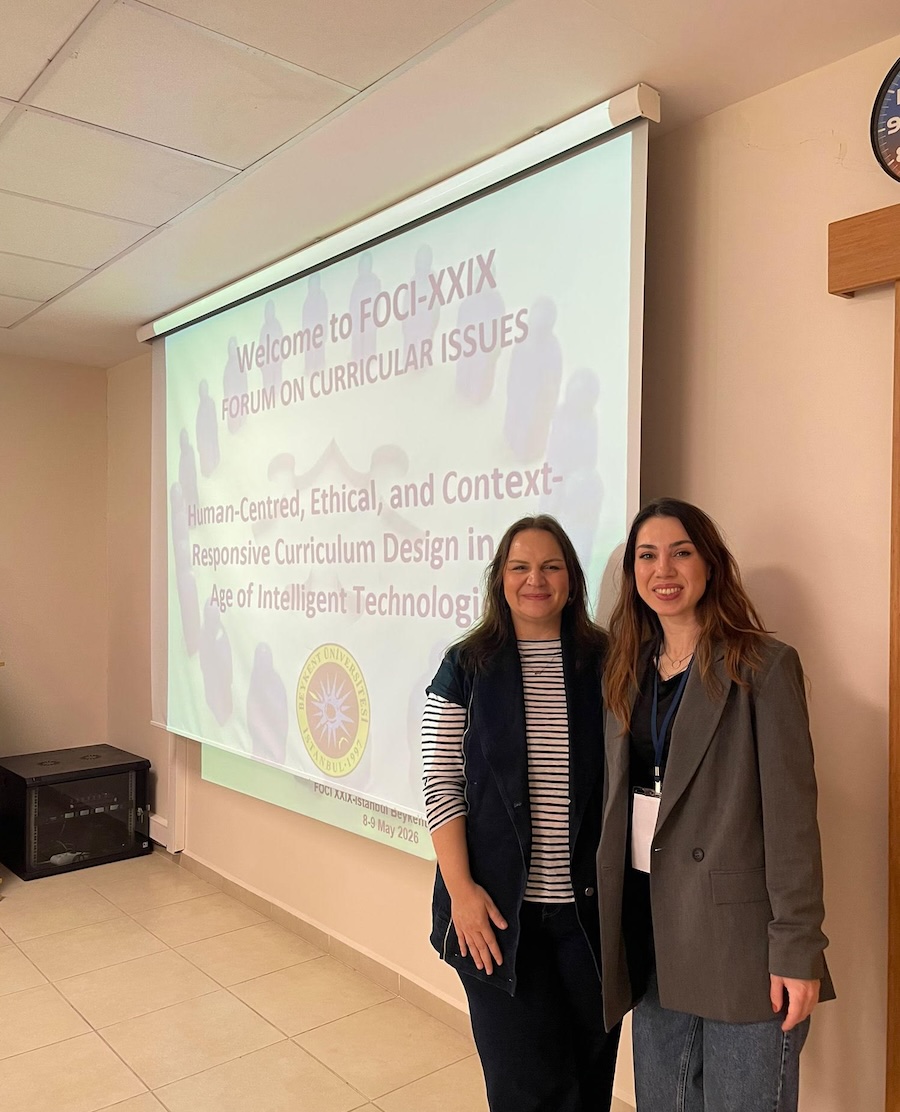
On 8th and 9th May we attended FOCI-XXIX at Istanbul Beykent University, which brought together language educators from a range of institutions to discuss the role of artificial intelligence in higher education. The theme of the forum was Human-Centred, Ethical, and Context-Responsive Curriculum Design in the Age of Intelligent Technologies. Throughout these two days, participants explored how AI can be integrated into educational settings while maintaining meaningful learning experiences, supporting student agency, and preserving the central role of teachers.
The event included two presentations as well as collaborative discussion sessions in which participants from different universities shared concerns, practices, and future directions for AI integration.
Both presentations emphasized a common message: AI should be viewed as a tool that supports learning rather than replaces it. The first presentation, delivered by Eylem Er, focused on translating human-centred and ethical principles into institutional practice. The discussion highlighted the importance of clear policies, stakeholder training, transparency, and ongoing evaluation when implementing AI initiatives. The second presentation, delivered by Banu Yazıcı, showcased two AI-supported writing prototypes developed with ChatGPT. These prototypes aimed to guide students through stages of the writing process while promoting learner autonomy, responsible AI use, and more effective prompt design. Together, the presentations reinforced the idea that successful AI integration depends not only on the technology itself but also on thoughtful pedagogical design.
The discussion sessions generated a wide range of recommendations that can be grouped around four major themes: ethical use and policy, human-centred learning, materials design, and institutional implementation.
One of the strongest themes across groups was the need for clear institutional policies. Participants argued that ethical AI use should be considered a shared responsibility among students, teachers, administrators, and policymakers. Several groups suggested developing institutional handbooks, codes of conduct, and transparency guidelines that clarify when and how AI can be used. Privacy, copyright, data protection, and academic integrity were repeatedly identified as areas requiring further attention. Rather than relying solely on individual judgement, participants emphasized the importance of institution-wide frameworks supported by training and regular review.
A second recurring theme concerned the preservation of human-centred learning. Many participants expressed concerns about over-reliance on AI and stressed that technology should complement rather than replace human thinking. Learning processes, critical thinking, self-reflection, and learner autonomy were viewed as essential components that should remain at the centre of curriculum design. Some groups advocated a "process before product" approach in which students first engage with content independently before using AI for feedback, revision, or refinement. Participants also discussed the growing importance of lifelong learning skills such as self-regulation, critical evaluation of information, and responsible technology use.
Discussions surrounding materials design focused on the need for purposeful and pedagogically driven implementation. AI-generated materials should be piloted, evaluated, and aligned with learning outcomes before large-scale adoption. Participants highlighted the importance of prompt literacy, task differentiation, and meaningful student engagement. AI was frequently described as most valuable when supporting routine or repetitive tasks, freeing teachers to focus on higher-order learning, interaction, and feedback. At the same time, participants cautioned against superficial uses of AI that encourage one-click answers without deeper engagement.
Institutional implementation emerged as another important area. Many participants recommended conducting needs analyses before introducing new AI initiatives. Understanding how students and instructors currently use AI, where support is needed, and what concerns exist was viewed as a necessary first step. Several groups also suggested establishing dedicated AI or digital learning units that could coordinate training, monitor developments, pilot innovations, and support policy development. Continuous professional development for instructors was considered essential, as effective AI integration depends largely on human expertise rather than the technology itself.
As we reflected on these discussions, several ideas appeared particularly relevant to our own context. The development of clear guidelines for students and instructors, the creation of practical support resources, and a systematic needs analysis could help ensure that AI initiatives respond to actual rather than assumed needs. We were also interested in the idea of purpose-specific AI tools designed to support particular educational goals rather than encouraging generic AI use. Examples discussed during the forum included student support chatbots and academic writing assistants.
Perhaps the most significant takeaway from the forum was that discussions about AI are gradually shifting away from questions of adoption and toward questions of implementation. The challenge is no longer whether AI will be part of education, but how it can be integrated in ways that remain ethical, pedagogically sound, and responsive to local needs. Across presentations and discussions alike, participants consistently returned to the same principle: AI should enhance human learning, not replace it. Maintaining that balance will likely remain one of the central challenges and opportunities for educational institutions in the years ahead.
https://focionline.wordpress.com/