Notes from the Sabancı University AI in Action: Transforming Language Teaching for the Future Conference
Notes from the Sabancı University AI in Action: Transforming Language Teaching for the Future Conference
by Selin Şenay
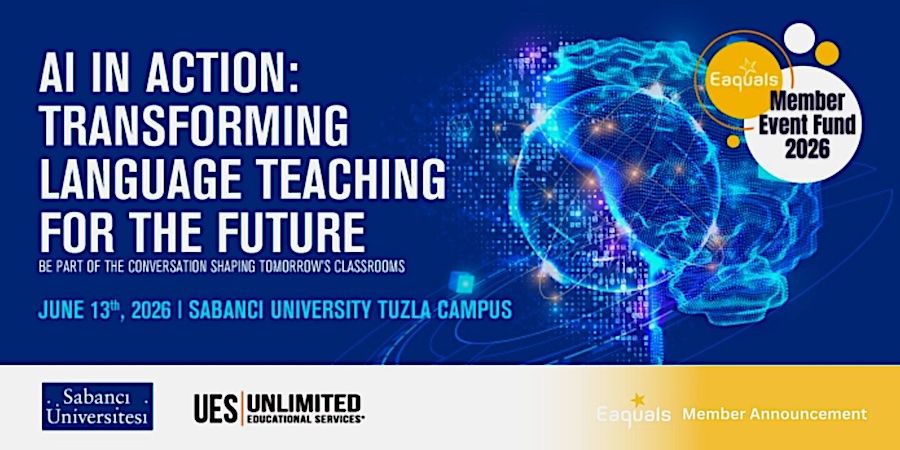
On 13 June 2026, I attended the AI in Action: Transforming Language Teaching for the Future Conference hosted by Sabancı University in collaboration with EAQUALS. The event brought together academic professionals, researchers, and educators to explore the integration of artificial intelligence into education across diverse contexts and to exchange institutional practices and perspectives.
In his plenary speech, Mr. Mustafa Canlı, Director General for Innovation and Educational Technologies at the Ministry of National Education, outlined the Ministry’s strategic response to the rapid evolution of digital technologies, and noted that concepts such as machine learning, artificial intelligence, and neural networks have already been incorporated into the fifth-grade informatics curriculum and are supported by national digital platforms, including EBA and BTK Academy. While demonstrating the potential of AI agents to significantly accelerate content generation, he stressed that teachers and structured curricula remain indispensable components of the educational process.
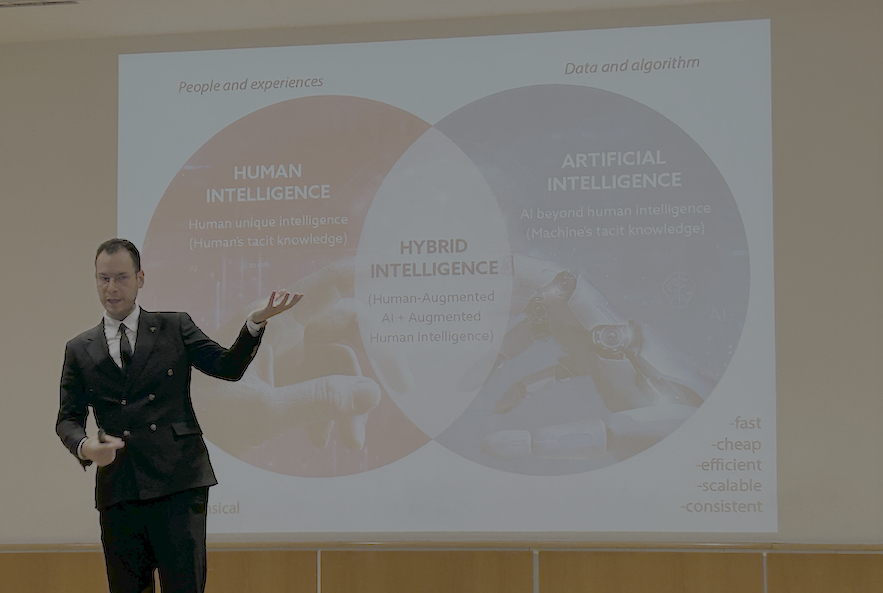
Prof. Dr. Yavuz Samur discussed the rapid development of technology, machine learning, and artificial intelligence, focusing on their current and prospective implications for society and education. AI applications in educational settings are currently employed primarily for lesson planning, feedback design, workflow management, and activity generation. However, we need to reimagine education in response to the profound impact AI, expected to have on the labor market and the teaching profession. He advocated a model of “hybrid intelligence,” combining the empathy, creativity, and intuition of human intelligence with the speed, scalability, and consistency offered by AI systems. He argued that educators need to develop a deeper understanding of AI tools than their students in order to guide them effectively and cultivate critical competencies, including ethical awareness, critical thinking, inquiry skills, and an understanding of the environmental implications of AI usage. He also highlighted the unique role of teachers as repositories of valuable “big data” concerning students’ strengths, weaknesses, and learning behaviors, enabling more personalized and effective learning pathways.
During the discussion sessions facilitated by Jacqueline Einer, I had the opportunity to learn about AI-related practices adopted by different institutions and to exchange ideas with colleagues from diverse educational contexts. These discussions highlighted both the opportunities and challenges associated with AI integration and demonstrated the variety of approaches currently being explored.
The conference reinforced the view that artificial intelligence represents a transformative technological milestone comparable to previous paradigm-shifting innovations, and we need to discuss how it should be integrated into educational contexts responsibly and purposefully to augment, rather than replace, human expertise and pedagogical judgment.
The emphasis on hybrid intelligence was particularly meaningful as it aligns with the belief that the uniquely human aspects of teaching—empathy, mentorship, ethical guidance, and contextual awareness—will become even more important in an AI-enhanced educational landscape. It was a good opportunity for continuous professional development and collaborative dialogue as education adapts to an increasingly AI-mediated future. I would like to thank our colleagues in SL in their efforts in organizing the event.