
AI.SU: Artificial Intelligence, Fashion, Creativity and the Human Touch
AI.SU: Artificial Intelligence, Fashion, Creativity and the Human Touch
by Özlem Zengin
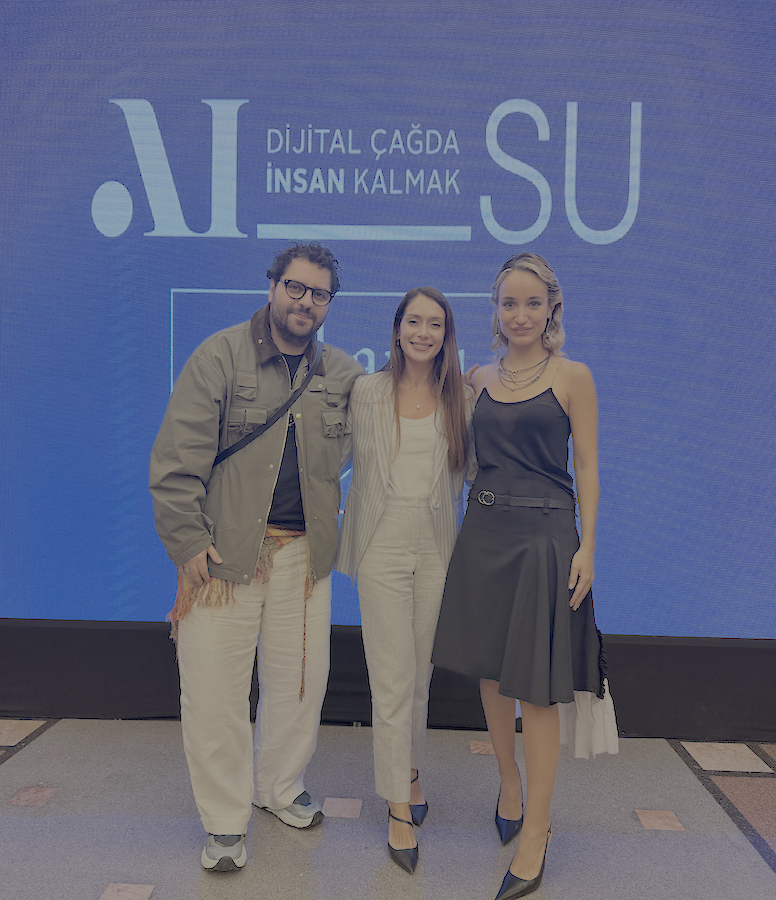
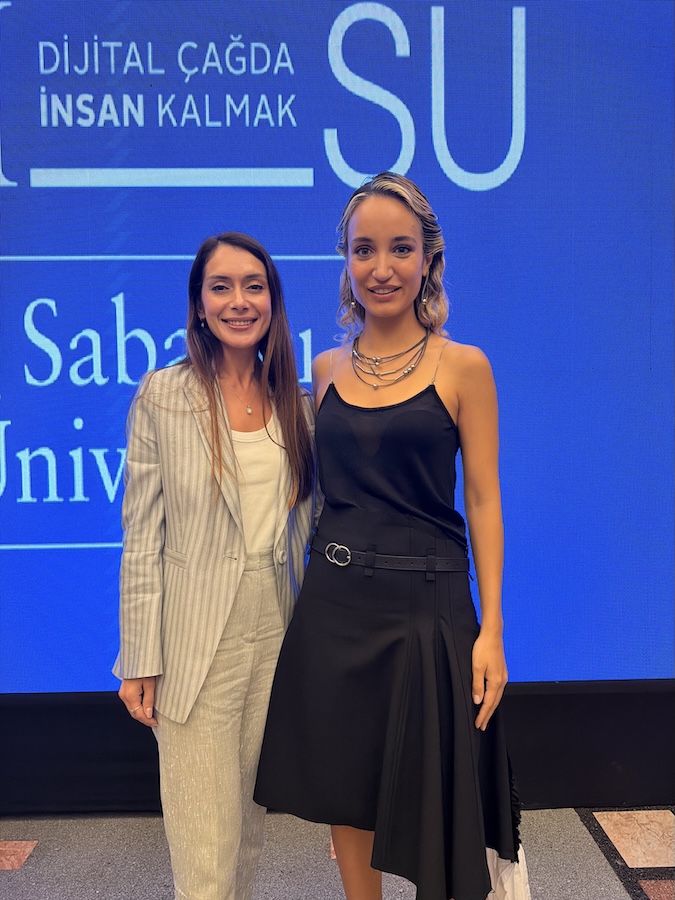
I was recently invited by Sabancı University and Melisa Sabancı Tapan to attend the latest AI.SU event, held at Karaköy Minerva Han. AI.SU brings together different disciplines to explore how artificial intelligence is reshaping the way we think, create, make decisions and relate to one another. This particular gathering focused on artificial intelligence, fashion, creativity and the importance of preserving the human touch in an increasingly AI-supported world.
The event was built around a central question:
As artificial intelligence redefines the ways in which we produce and create, how can we protect the values that make us human?
The guest speaker was Bünyamin Aydın, founder of Les Benjamins, who shared his experience and perspective on the role of artificial intelligence in the fashion industry. His talk offered an interesting view of how AI is already influencing different stages of fashion, including design, production, trend forecasting, personalisation and creative decision-making.
One of the most interesting aspects of the session was the discussion around originality and cultural identity. Bünyamin Aydın spoke about the importance of cultural codes in building a distinctive brand identity and reflected on the question of how brands can remain original when AI systems are increasingly capable of generating visual concepts, designs and creative suggestions at great speed.
This led to a broader discussion about the difference between generation and creation. AI can produce large numbers of ideas, images and alternatives in a very short time. However, creativity is not simply about producing more options. It also involves intention, context, cultural knowledge, experience, interpretation and judgement. In fashion, the human creator brings a personal and cultural perspective that cannot simply be reduced to data or automated generation.
The discussion also touched on how AI may influence the entire fashion ecosystem. Participants reflected on areas such as consumer preferences, personalised experiences, forecasting future trends, supporting design processes, increasing efficiency and changing the relationship between designers, brands and audiences. At the same time, this raised important questions about whether greater efficiency might sometimes come at the expense of originality or whether constant reliance on algorithmic suggestions might make creative work more similar rather than more diverse.
Another important theme was the idea of the human touch. In a field such as fashion, where identity, aesthetics and cultural expression are central, human judgement remains particularly important. Technology can support creativity, but decisions about meaning, relevance, authenticity and cultural representation still require human interpretation.
Following the main talk, the event continued with an interactive discussion among participants, where the wider effects of artificial intelligence were explored collectively. The conversation moved beyond fashion and considered how AI is influencing different professional and creative fields. Questions around authenticity, authorship, creativity, responsibility, originality and human agency emerged repeatedly throughout the discussion.
I found these discussions particularly relevant to education. Although fashion and education may appear to be very different fields, many of the questions are remarkably similar.
In education, we are also asking:
How much of the thinking process should be supported by AI?
When does AI function as a useful scaffold, and when might it begin to replace cognitive effort?
How can we protect learner agency, creativity and ownership?
How do we ensure that technology expands human capability rather than reducing the need for human judgement?
The discussion at AI.SU therefore reinforced an idea that is becoming increasingly important across disciplines: the key question is no longer simply what AI can do, but how humans choose to work with it.
For educators in particular, this shift is significant. AI literacy is not only about learning to use tools effectively. It also involves understanding when to use them, when to question them, when to reject their suggestions and how to retain responsibility for the final decision. These are skills that matter in the classroom, but they are equally relevant in design, business, fashion and other professional contexts.
I would like to thank Melisa Sabancı Tapan and Sabancı University for the invitation, and Bünyamin Aydın for sharing his experiences and perspectives. AI.SU offered a valuable example of why interdisciplinary conversations around artificial intelligence matter. Understanding AI requires more than technological knowledge; it requires conversations across education, culture, creativity, business and society.
Perhaps the most important question I took away from the event was this:
As AI becomes increasingly involved in how we create, learn and make decisions, how can we ensure that human judgement, cultural identity, creativity and responsibility remain at the centre?
For me, this is not only a question for fashion or education. It is becoming one of the defining questions of how we choose to live and work with artificial intelligence.
.